
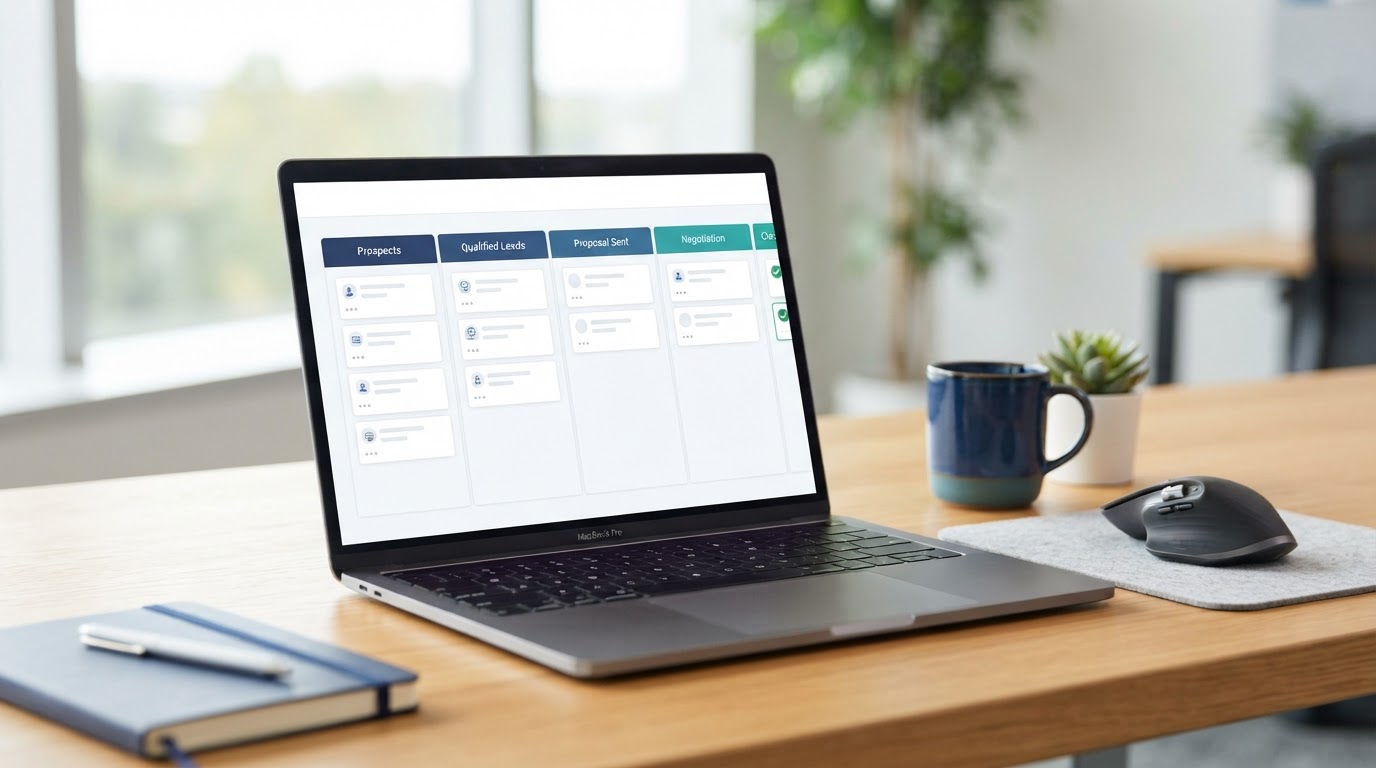
Sales Pipeline Setup That Shows You Where Every Lead Stands
A visual pipeline that tracks each opportunity from new inquiry to decision, so you always know who needs attention and what should happen next.
What Sales Pipeline Setup Means in Plain Language
A sales pipeline is a visual way to track each opportunity from the moment someone first asks about your business through follow-up, appointment, decision, onboarding, or closure. Instead of leads sitting in an inbox or a notebook with no clear next step, a pipeline shows you exactly where every opportunity stands and what should happen next.
RJ Semaj Solutions designs and sets up a pipeline around your real sales process, with plain-language stages, clear ownership, and the rules that govern how a lead moves forward. The goal is a shared view of your opportunities that your team can actually use, explained in clear language, not a complicated system no one trusts.
Who This Is a Good Fit For
Sales pipeline setup is a good fit for businesses that receive leads but cannot quickly tell who needs attention or what stage each opportunity is in.
- A business that receives inquiries but loses track of them
- A business unsure what stage each opportunity is in
- A business where leads sit untouched with no next step
- A business with weak handoffs between people or steps
- A business that cannot see how its opportunities are progressing
Who May Not Need It Yet
A pipeline is not always the first step. You may not need one right now if any of these are true.
- You receive very few leads and can track them in your head
- You have no reliable way to capture leads to feed the pipeline
- Your contacts are not yet organized in a CRM
- You need to fix your follow-up process before tracking stages
Common Needs We Help With
These are the everyday situations small businesses bring to us. We address them with a clear, shared pipeline, not fear or exaggerated promises.
Lost leads
Inquiries come in but get buried, so promising opportunities disappear before anyone follows up.
Unclear next actions
No one knows what should happen next for a given lead, so work stalls by default.
Inconsistent stages
Each person describes the sales process differently, so the same lead sits in different places for different people.
Opportunities sitting untouched
Leads enter the pipeline but nothing moves them forward, so interest goes cold over time.
Weak handoffs
When a lead moves from one person or step to another, information is lost and the next step is unclear.
Limited visibility
You cannot quickly see how many opportunities are active, where they are, or what is progressing.
The RJ Semaj Solutions Approach
We map the real sales process, define plain-language stages, set ownership and required information, configure opportunity rules, connect appropriate automations, and test with sample leads. We explain technology in plain language, recommend only the tools that fit your needs, separate each client's information, include human-review points, and test systems before launch.
AI may support drafting and organization, but it does not replace professional review. Every stage, rule, and automation is checked by a person before your pipeline goes live.
An Example Pipeline, Stage by Stage
A simple illustration of how a lead moves through a pipeline. The leads below are fictional examples only, not real client data. Each stage shows what must happen before a lead advances.
- 1
New Inquiry
Aisha (example)Asked about a website through the contact form.
Advances when
Contact details are confirmed and the inquiry is qualified as a real opportunity.
- 2
Follow-Up Started
Marco (example)Received a first response and a short questionnaire.
Advances when
The prospect replies and agrees to a conversation about their needs.
- 3
Appointment Scheduled
Lena (example)Booked a free business growth assessment call.
Advances when
The call takes place and the business needs are confirmed.
- 4
Decision
Tomas (example)Proposal sent, reviewing scope and terms.
Advances when
The proposal is accepted or declined, with the outcome recorded.
- 5
Onboarding or Closed
Priya (example)Agreement signed, onboarding workflow started.
Advances when
This is a terminal stage. The opportunity is closed and handed off.
Stages, names, and rules are defined with you and agreed in your written proposal. The pipeline is built around your real process, not this example.
What a Clear Pipeline Gives You
These are operational and customer-experience benefits. We do not promise financial results, conversions, or sales.
See where every lead stands
A visual board shows each opportunity and its stage, so you know who needs attention at a glance.
Clear next steps
Each stage has a defined action, so a lead never sits with no obvious next move.
Consistent stages
Everyone uses the same stages and definitions, so opportunities are tracked the same way across your team.
Clear ownership
Every opportunity has an owner, so nothing falls through the cracks or gets contacted twice.
Better handoffs
Required information travels with the lead, so the next person picks up where the last one left off.
Visibility into progress
Reporting shows how opportunities are moving, so you can spot stalls and adjust your process.
How a Pipeline Project Unfolds
Six steps from mapping your process to launch. The exact timeline depends on your process complexity and how quickly approvals move, and is shared in your proposal before work begins.
- 1
Map the Sales Process
We map your real sales process from first inquiry to close, so the pipeline reflects how your business actually works rather than a generic template.
- 2
Define Stages
We define plain-language stages and agree on scope, ownership rules, and revision limits in your written proposal.
- 3
Set Ownership and Required Info
We set who owns each opportunity and what information must be present before a lead can move forward.
- 4
Configure Opportunity Rules
We configure the rules that govern how opportunities move, stall, and close, with human-review points throughout.
- 5
Connect Automations
We connect appropriate automations such as consent-based follow-up and appointment booking when those services are part of your project.
- 6
Test With Sample Leads
We test the pipeline with sample leads end to end, review the results with you, and launch only after you approve it.
Possible Pipeline Scopes
These describe common scopes so you can think about what fits. Prices, inclusions, and revision limits are defined in your written proposal after we understand your needs. We do not publish prices here.
Basic pipeline
A simple visual pipeline with plain-language stages, ownership, and the rules that govern how leads move. Suited to a business that needs a clear, shared view of its opportunities for the first time.
Multi-service pipeline
A pipeline with separate stages or paths for different services or offer types, so each line of business is tracked on its own terms. Suited to a business that sells more than one thing.
Pipeline optimization
A review and rework of an existing pipeline to fix unclear stages, weak handoffs, and stalled leads. Suited to a business that has a pipeline but cannot tell what is working.
What We Ask of You
A useful pipeline depends on a few things from your side.
- Explaining your real sales process so the pipeline reflects how you actually work
- Confirming who owns each opportunity and what information must be present at each stage
- Approving the stage definitions and rules before we connect any automations
- Granting access to your CRM, calendar, or tools only when needed and as agreed in your proposal
Honest Limitations
Clear terms are part of every project. Here is what we do not promise.
- We do not guarantee leads, sales, revenue, conversion rates, or business results
- We do not guarantee that any lead will advance, close, or convert
- Project timelines depend on your process complexity and how quickly approvals move
- Platform and usage charges from third-party tools are separate from our service fee and are disclosed in your proposal
Related Services and Logical Next Steps
A pipeline works best when it sits on organized contacts and connects to follow-up, booking, and reporting. These services pair naturally with sales pipeline setup.
CRM Setup and Contact Organization
Organize your contacts first so the pipeline has clean, searchable records to draw from.
Automated Lead Follow-Up
Connect consent-based email and SMS follow-up so leads keep moving between stages.
Appointment Booking Systems
Let prospects book a conversation directly, advancing them from inquiry to appointment.
Reporting Dashboards
See how your pipeline is performing with clear reports on stages and progress.
Sales Pipeline Setup Questions
Practical answers about contacts versus opportunities, stages, automation, stalled leads, reporting, and customization.
Let's Map a Pipeline That Fits Your Real Sales Process
Schedule a free business growth assessment. We'll review how leads come in today, where they get stuck, and what a clear pipeline could look like for your business. No obligation.
Mon - Fri: 8:00 AM - 1:00 PM CT · Appointments outside these hours may be available by request.